
#059: Arcanine
Lion Kings

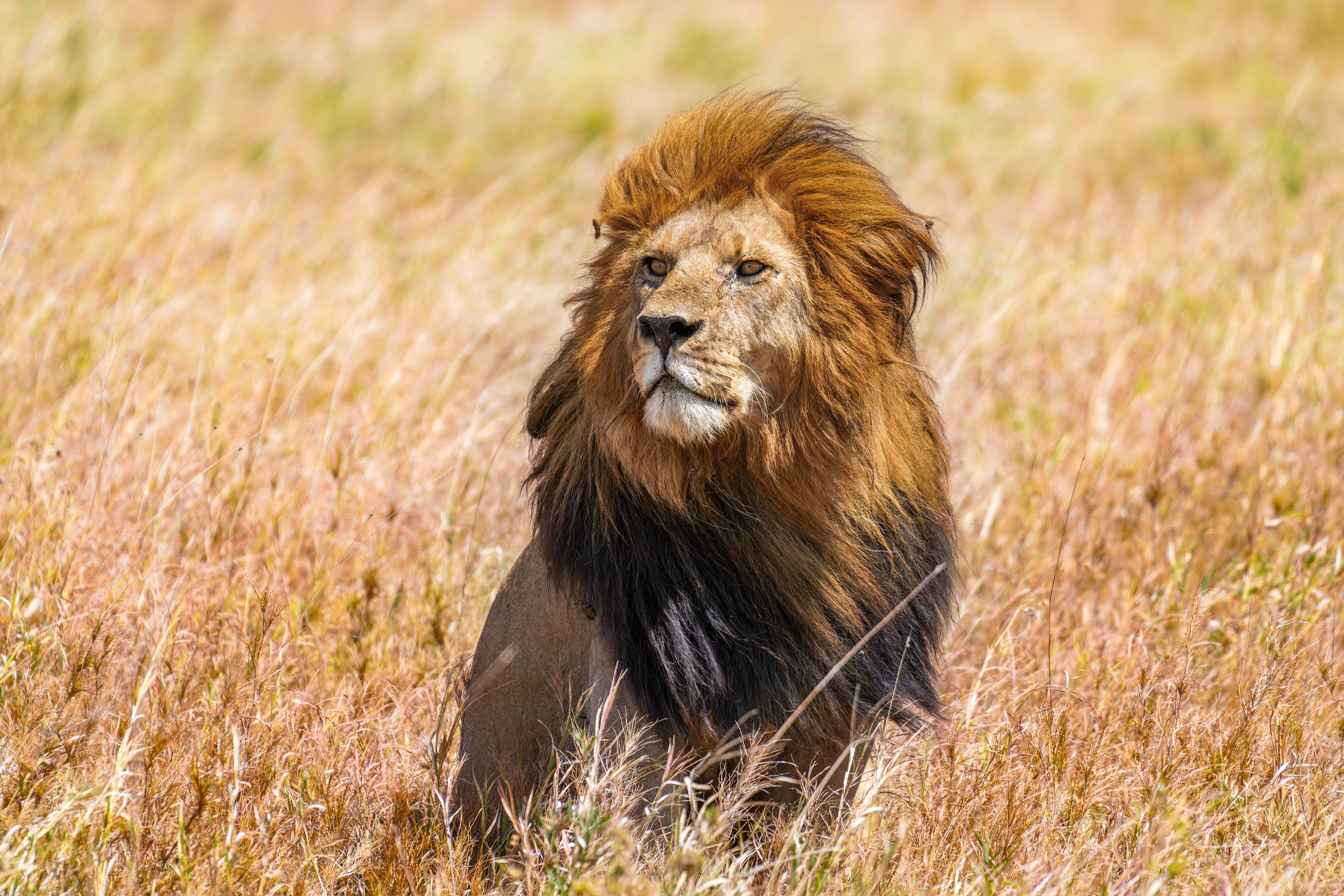
But amid all these rejoicings Aslan himself quietly slipped away. And when the Kings and Queens noticed that he wasn’t there they said nothing about it. For Mr. Beaver had warned them, “He’ll be coming and going,” he had said. “One day you’ll see him and another you won’t. He doesn’t like being tied down—and of course he has other countries to attend to. It’s quite all right. He’ll often drop in. Only you mustn’t press him. He’s wild, you know. Not like a tame lion.”
C.S. Lewis, The Lion, The Witch and The Wardrobe
In the second episode of the Pokémon anime, Ash and Misty take an injured Pikachu to Viridian City’s Pokémon Center. While Pikachu undergoes emergency treatment, they sit in a waiting room decorated with a large bas-relief featuring stylized, heraldic depictions of four Pokémon: the three legendary birds Articuno, Zapdos and Moltres; and Arcanine, which evolves from Growlithe.
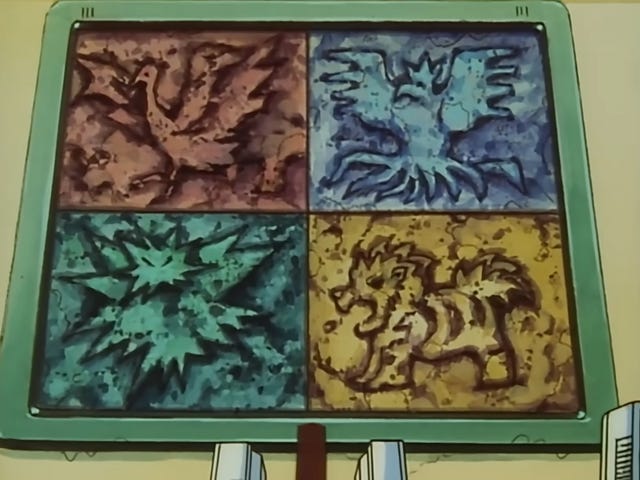

If you’re familiar with Pokémon folklore, then you know that Arcanine is in elite company. The three legendary birds are just that: legendary, seldom seen, immensely powerful, the subjects of in-universe myths. Unique individuals encountered just once, creatures that seem more like gods or embodiments of natural forces than animals with limited lifespans.
Arcanine does not exactly fall into this category. A Pokémon Red or Yellow player can catch a half-dozen Growlithe, evolve them with Fire Stones and have a whole party of Arcanine. Multiple trainers own them in both the anime and games, most notably Ash’s rival Gary. Players of more recent games can even catch wild Arcanine in various locations.
Other signs, however, point to Arcanine being something of a semi-legendary Pokémon, with a status perhaps just below that of the true Legendary Pokémon like Articuno, Zapdos, Moltres and Mewtwo.
For instance, every Pokémon has a species or category name that might be shared with other Pokémon in addition to its unique, commonly used name. Bulbasaur, Ivysaur and Venusaur, for instance, are all Seed Pokémon; Charmander is a Lizard Pokémon; Clefairy and Clefable are Fairy Pokémon. While the doglike Growlithe is a Puppy Pokémon, its evolved form Arcanine has (somewhat confusingly) the official species/category name of Legendary Pokémon.
Pokédex entries provide even more evidence that Arcanine has a special place in the world of Pokémon:
Red and Blue Pokédex: “A Pokémon that has been admired since the past for its beauty. It runs agilely as if on wings.”
Yellow: “A legendary Pokémon in China. Many people are charmed by its grace and beauty while running.”
Pokémon Stadium: “A Pokémon whose beauty is legendary in China. It is said to run gracefully and lightly, as if it were flying.”
These references to China seem like nods to one of Growlithe and Arcanine’s main sources of inspiration, the Chinese lion-dog statues known as shíshī, which I covered in the previous post. This post, on the other hand, will cover the real animal that inspired both the statues and the Pokémon, an animal that seems to have a similar status in our world as Arcanine does in the Pokémon world: the lion, simultaneously symbolic and biological, a real animal and an archetypal, heraldic figure.
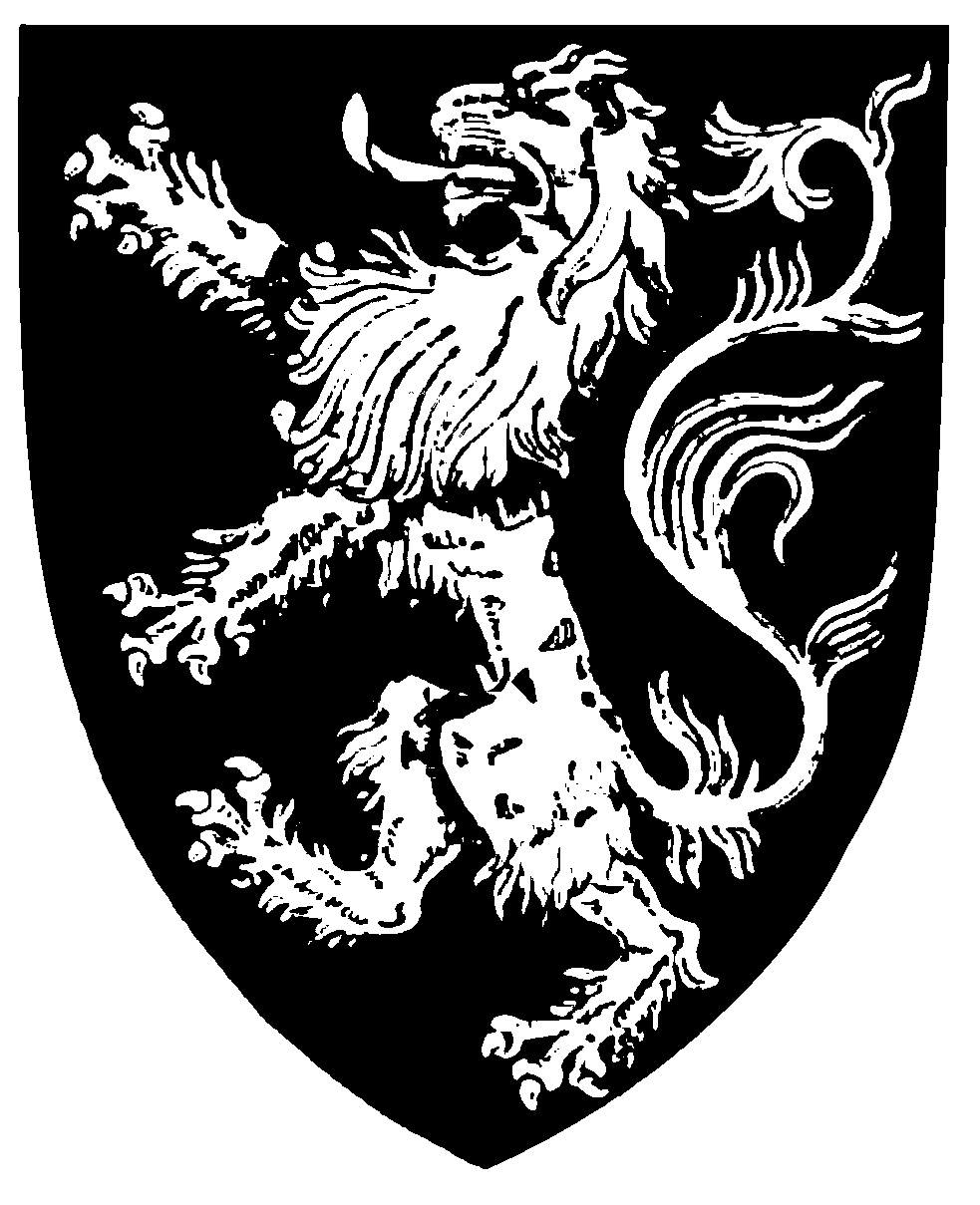
The late French medievalist Jean Dufournet famously wrote that “au douzième siècle, le lion est partout.”1 In the 12th century, the lion is everywhere. British scholar Nigel Harris argues that this statement applies to the entire Middle Ages; I’d take it even further, because the lion was everywhere in the cultural world I grew up in:
Herakles wearing the skin of the Nemean lion;
A ghostly vision of Mufasa telling the young Simba to “remember who you are” in The Lion King (1994);
The MGMG lion roaring before other movies;
C.S. Lewis’s messianic Narnian lion Aslan;
The winged lion of St. Mark the Evangelist
The emblem of Gryffindor in Harry Potter;
Bob Marley singing “Iron Lion Zion;”
Dozens of coats of arms, most famously the United Kingdom’s;
Dozens of national, regional and city flags, including those of Spain, Sri Lanka and pre-revolutionary Iran;
Dozens of corporate logos, including MGM, Peugeot, the NFL’s Detroit Lions, and British football’s Aston Villa and Chelsea F.C.
Lion symbolism dates back to the beginnings of art and literature. The world’s oldest statue is the Löwenmensch figurine, a lion-headed humanoid creature carved out of mammoth ivory in what is now Germany’s Swabian Jura mountains approximately 40,000 years ago. More than 30,000 years ago, people painted images of the now-extinct cave lion (Panthera spelaea) on the walls of the Chauvet-Pont-d’Arc Cave in what is now Ardèche, France. Lions appear on the walls of the Arcy-sur-Cure caves (as old as 28,000 years ago) and of Lascaux, the ‘Sistine Chapel of prehistory’ (about 17,000 to 20,000 years ago).
Millennia later, the Epic of Gilgamesh and the Homeric epics abound in lion imagery. In the Iliad, for instance, Aeneas is “proud in his fighting power like some lion;” Ajax is “lionhearted;” Ajax and Hector attack each other “like lions rending flesh;” Diomedes attacks the Thracian camp “as a lion springs on flocks unguarded, shepherd gone/pouncing on goats or sheep and claw-mad for the kill.”2 The Old Testament mentions lions more than 150 times, literally and figuratively, from Daniel in the lion’s den to symbolic Lion of Judah.
How and why did the lion evolve from a real animal into an almost mythical symbol?
Part of the answer has to be that lions once inhabited a much larger range than they do today: from Bulgaria in the north to the southern tip of Africa, from the Maghreb in the west to India in the east. Mycenae’s famous lion gate and tales of Herakles slaying the Nemean lion and wearing its skin date back to a time when lions inhabited Greece.
Anyone who’s ever seen a zoo lion knows that lions are magnificent animals, sublime in the Burkean sense, and that trying to explain that magnificence is like trying to explain the magnificent of a mountain or an ocean or the sun or the moon. Contemporary environmentalists describe lions as charismatic megafauna, animals whose massive popular appeal makes them powerful conservation symbols. A 2018 study ranked tigers and lions as the most charismatic animals, ahead of giraffes, leopards, pandas, cheetahs and polar bears. When zoos and conservation programs want to reach a wide audience, they tend to turn to the image of a lion. The Lion King (1994) is the all-time highest grossing traditionally animated film.
The lion is a powerful symbol in a world where its habitat has been reduced to parts of Sub-Saharan Africa and India’s Gir National Park. Imagine the kind of symbolic power it must have had in a world where its habitat extended across many different cultures, the kind of impression it must have left in a world where Egyptian pharaohs and Assyrian kings and Persian kings of kings hunted lions as symbolic, ritualistic expressions of their power and status. Enough of an impression to withstand the lion’s loss of habitat and to extend the lion’s cultural presence beyond that habitat.

For instance, lions have not inhabited Britain since the cave lion went extinct about 13,000 years ago. London is nonetheless a leonine city: the pair of stone lions guarding the side entrance to the British Museum and the famous Assyrian lion hunting relief housed inside; the quartet of lions guarding Nelson’s Column in Trafalgar Square; the South Bank Lion on Westminster Bridge; men and women’s basketball teams both called the London Lions; the Chelsea F.C. logo; at least twenty pubs called The Red Lion, which is Britain’s most common pub name; the coats of arms of the United Kingdom, England, Imperial College London, King’s College London, and the boroughs of Barking and Dagenham, Barnet, Brent, Camden, Croydon, Enfield, Greenwich and Hillingdon.
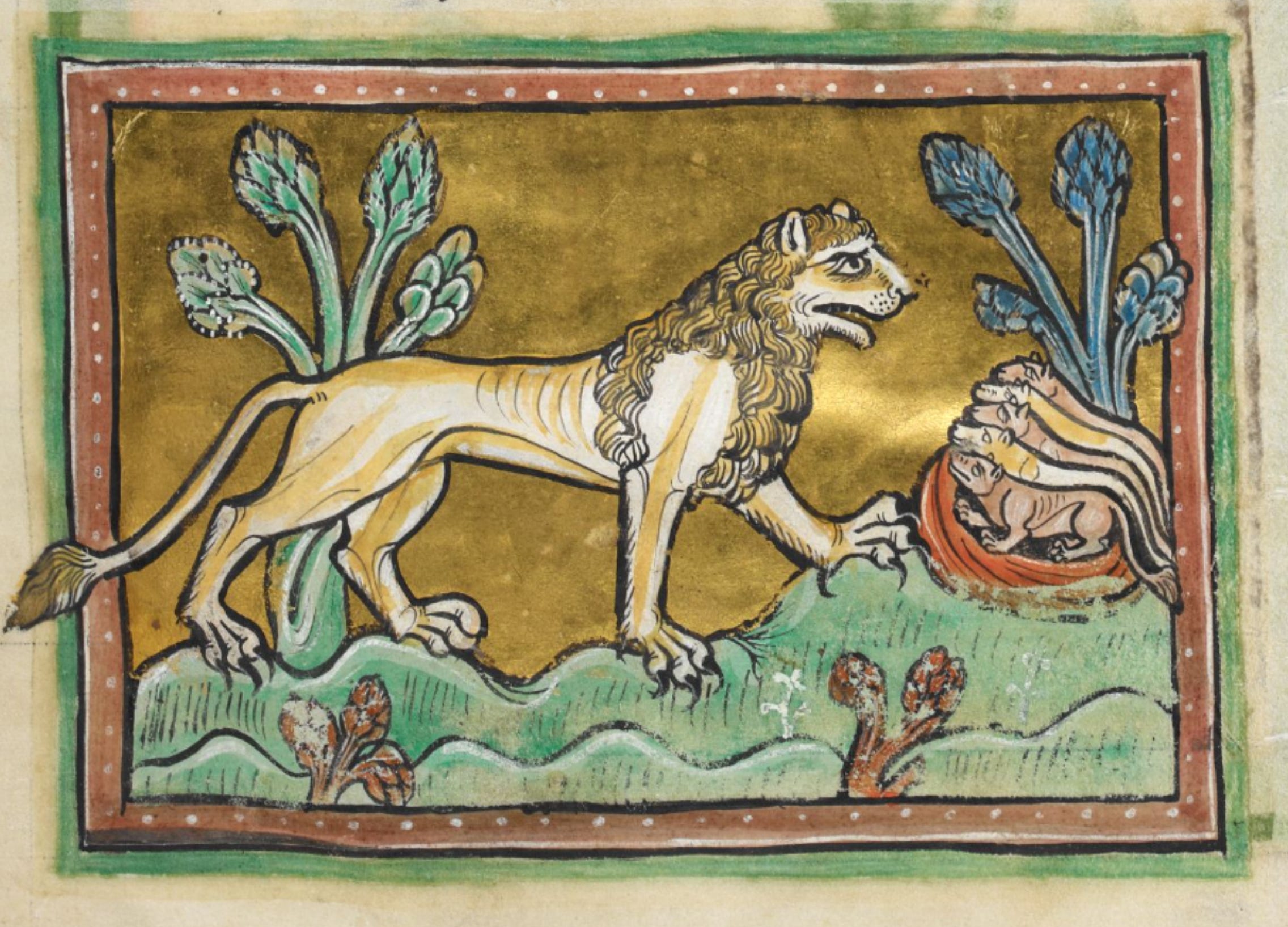
Leonine London is very much a product of a medieval Europe where the lion was everywhere. In the middle ages, Nigel Harris writes in “The Lion in Medieval Western Europe: Toward an Interpretive History,” the lion was a ubiquitous, complex symbol. Its meanings “almost always involved someone powerful or important: Christ, kings, knights, or indeed the devil.” Harris identifies four main strands of medieval lion symbolism:
The Threatening Lion: A ferocious wild beast, as seen in Old Testament imagery, lion-slaying mythical and biblical heroes like Gilgamesh, Herakles, David and Samson, and the apotropaic lions I’ve previously discussed.
The Christian Lion: Bestiaries describe stillborn baby lions brough back to life after three days by their father’s breath, a clear allegory for the Resurrection.
The Noble Lion: the lion as king of beasts and thus the perfect symbol of human kings.
The Sinful Lion: the lion as a symbol of superbia, the sin of pride, as exemplified by Dante’s encounter with a lion in the dark wood at the beginning of the Commedia.
The Clement Lion: An embodiment of magnanimity, of generosity, of kingly virtues.
As the late middle ages became the early modern period, the lion’s royal meaning came to dominate. “In an age of increasingly absolutist royal power,” as Harris puts it, “the ‘lion king’ came into his own.” He’s retained that status over the centuries; the current royal coats of arms of Belgium, Denmark, Luxembourg, The Netherlands, Norway, Spain, Sweden and the United Kingdom all feature lions, with no fewer than nine lions appearing on the U.K. coat of arms.

.svg)

.svg)


Harris’s article includes one detour very relevant to Pokémon. When discussing medieval romances, Harris mentions “numerous occasions on which lions befriend and accompany knights.” He focuses on one of these numerous occasions, the tale of the Arthurian knight Yvain encountering a lion fighting a dragon intervening on the lion’s behalf. After Yvain kills the dragon, the lion becomes a “constant companion, grateful, loyal, and helpful both in combat and in more peaceful times:” a living embodiment of the heraldic lion on a knight’s shield and of what it represents.
In a post on Charizard, I mentioned the various medieval hagiographic tales of saints taming dragons; the Pokémon protagonist is a distant descendent of these saints and knights.

How does the Pokémon Arcanine express its leonine ancestry? Most obviously through its appearance, its combination of a lion’s golden mane and a tiger’s black and orange stripes into a single über-charismatic big cat.
Second, through the royal language of later Pokedex entries:
Gold: “This legendary Chinese Pokémon is considered magnificent. Many people are enchanted by its grand mane.”
Silver: “Its magnificent bark conveys a sense of majesty. Anyone hearing it can’t help but grovel before it.”
Diamond, Pearl and Platinum: “Its proud and regal appearance has captured the hearts of people since long ago.”
Legendary, magnificent, grand, majesty, proud, regal: royal words.
But despite being regal and legendary and magnificent, Arcanine is a supporting player in Pokémon multimedia, overshadowed by Pikachu and Meowth and Bulbasaur and other smaller, cuter creatures.
It does, however, play a potentially pivotal role in the original games.
While Pokémon’s tagline is “gotta catch ‘em all!”, actually catching them all in Pokémon Red and Blue is a task accomplished by only the most devoted completists, the equivalent of 100% completion in a newer game. Instead, the main story follows the protagonist’s quest to become the Pokémon League Champion, which involves winning eight gym badges from gym leaders across the Kanto region and then defeating each of the Elite Four at the Indigo Plateau.
After beating the Elite Four, the player learns that one more challenge awaits – the protagonist’s childhood frenemy/current rival got there first and is now the current champion. Your rival’s team of Pokémon during this final battle depends on which Pokémon you chose at the beginning of the game; your rival always chooses an elemental starter with an elemental type advantage against your own. If you chose either Charmander (like I always did) or Squirtle, your rival will have a high-level Arcanine in his party.
This means that, depending on how the battle plays out, an Arcanine could very well be your final obstacle in the Pokémon world’s equivalent of sudden death overtime in game seven of the Stanley Cup finals. In other words, Arcanine can be something of a Pokémon final boss: an appropriate role for Pokémon’s lion king.
Quoted in HARRIS, NIGEL. “THE LION IN MEDIEVAL WESTERN EUROPE: TOWARD AN INTERPRETIVE HISTORY.” Traditio, vol. 76, 2021, pp. 185–213. JSTOR, https://www.jstor.org/stable/27135357. Accessed 6 Jan. 2026.
Homer. The Iliad. Translated by Robert Fagles, Penguin Books, 1990.
Catching up on these excellent posts this Pokemon day. Never felt the mystique of arcanine but I confess that’s because I’m not a genwunner— my favorites are all generation 3-5 or so as that’s when I grew up. Very interesting to me that the lion is both a symbol of pride and of magnanimity in medieval Europe, as someone who has thought a bit about virtues and vices in that time, seems like keeping the distinction between those two vices/virtues was difficult in medieval ethical views
Wonderfu,l as always.